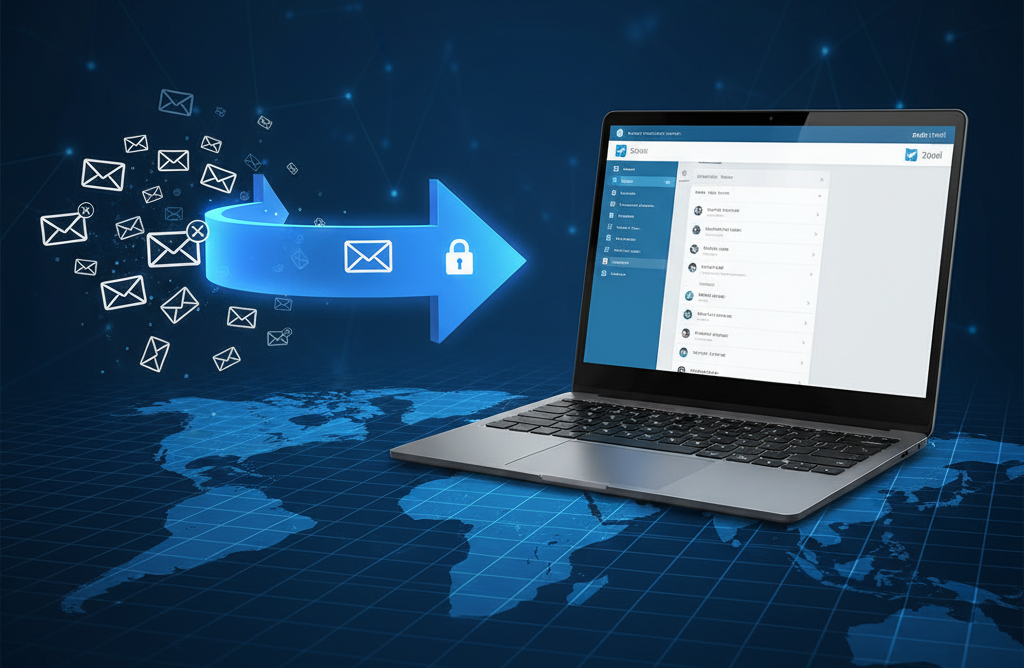
India’s silent shift of 12 lakh government email accounts — including those of top ministries — to Zoho marks a major milestone in digital self-reliance. This move underscores the nation’s push for data sovereignty, stronger security, and trust in homegrown technology.
For most people, email is a daily habit they hardly think about. It’s just another message sent, another file passed along — never something that seems monumental. But somewhere in the middle of the government’s usual rhythm of files, meetings and circulars, a silent shift unfolded over the past year. And by the time most people realised something had changed, all 12 lakh Central government email accounts, including those used by the Prime Minister’s Office, were already running on Zoho’s platform.
And behind this switch of 12 lakh govt email accounts to Zoho lies a complex mix of policy thinking, security concerns, digital self-reliance goals and the Centre’s desire to nudge its own workforce toward tools built in India.
Why the Government Moved 12 Lakh Email Accounts to Zoho
The National Informatics Centre (NIC) has been the backbone of government digital communication since the 1970s. Its email service has been the default for lakhs of Central and State government personnel for decades. Yet, as one senior official put it, “The time had come to modernise the backend.
According to the official, the transition wasn’t driven by dissatisfaction with NIC’s systems. The push came from a different direction: the increasing use of open-source office tools by government employees, many of them created files that weren’t always compatible with internal software standards or security protocols.
A Move Wrapped in the Government’s Bigger Tech Vision
While the email migration has immense technical implications, it also sits neatly inside a much broader national push toward digital sovereignty.
On October 3, the Ministry of Education issued a written directive encouraging the adoption of Zoho’s suite, calling it part of India’s transformation from a “service economy into a product nation.
The government’s emphasis on “data sovereignty” and “self-reliance” reflects a growing unease with global platforms and their sprawling data policies. When even personal apps and consumer services raise privacy concerns, tools used for drafting Cabinet notes and internal reports demand far higher scrutiny.
In this context, choosing Zoho was not merely a procurement decision; it was a signal.
The Actual Mechanics of the Migration
One of the most interesting details, which many employees didn’t immediately notice, is that the email IDs themselves did not change.
Whether it is name@nic.in or name@gov.in, the addresses remain exactly as they were and only the hosting service changes to Zoho.
The government gave Zoho the contract in 2023 for 7 years with the following conditions to be fulfilled:
- Migrating existing inboxes
- Syncing archives
- Integrating NIC’s access protocols
- Ensuring no downtime for users
- Creating a backend environment where employees could begin using Zoho’s office suite by default
Security: The Elephant in the Room
With any major software transition — especially one involving the highest levels of government — the obvious question arises: How secure is the new environment?
A senior official insisted that security was the first step in the evaluation, not an afterthought.
“We took reports from security agencies and bodies such as NIC and CERT-In. SQS audits the Zoho platform regularly. The data are safe and secure.”
India’s experience with cyberattacks, including the 2022 ransomware strike on AIIMS Delhi that crippled the hospital’s digital services for almost a month, has created a lasting memory across the government ecosystem.
It was after this attack that the Digital India Corporation issued a call for private cloud service providers, eventually leading to Zoho’s selection.
Those involved in the process say the government’s priority is to ensure the following:
- All sensitive documents remain within India
- Zoho’s security layers are independently audited
- Authentication tools remain under government oversight
- The encryption standards meet the rising sophistication of both state and non-state cyber actors
Why This Shift Matters More Than It Appears
For the average citizen, whether a government employee uses one email platform or another rarely feels significant. But the scale of this transition makes it notable in several ways:
1. India has chosen an Indian company for its most sensitive communication layer.
This is not a small detail. For decades, major global tech giants have dominated the software layer across governments worldwide. India’s choice signals confidence in local capability.
2. It sets the stage for future digital frameworks to prefer “Made in India” tools.
From OS-level tools to collaboration platforms, the Centre’s adoption acts as an endorsement that could influence State governments, public-sector units, and even private enterprises.
3. Reflects the federal vision of relying more on homegrown tech infrastructure
At a time when trade wars are escalating tensions among countries, India is rightly stepping up its initiative to rely more on homegrown tech solutions and infrastructure.
4. It pressure-tests Zoho on a scale few private companies encounter.
If Zoho can manage the email load of 12 lakh users across ministries, departments, missions, and regulatory bodies, it changes the way the world sees Indian enterprise platforms.
A Final Thought
In a world where most technology news revolves around flashy announcements and global product launches, India’s decision to move its entire government email backbone to Zoho happened almost silently.
Moving 12 lakh government email accounts to an Indian platform might just be remembered as a turning point in how India builds, secures, and owns its digital future.